

iOS Game Development
iOS Game Development | Universal iPhone and iPad Builds, Tuned for Apple Silicon, Built to Pass Review
Our iOS game development services cover iPhone and iPad in one universal project, from concept art and core-loop design through Unity, Unreal, or native Swift, to App Store launch and the LiveOps that follows. You get a straight read on scope, engine, and cost before a line of code is written.
Tell Us About Your iOS Game
We use your details only to scope your game and reply to you.






















What Sets Our iOS Game Development Apart
One Universal Build Across iPhone and iPad
To a seasoned iOS game developer, iOS is two form factors on a single platform. We ship one universal project that adapts its layout, controls, and art resolution to each device, which is cheaper to maintain than two codebases and is what App Store featuring tends to reward.
Apple Frameworks Used, Not Abstracted Away
As an iPhone game development company, we call Metal, SpriteKit, SceneKit, ARKit, and Game Center directly rather than through a lowest-common-denominator wrapper. That is the difference between a game that feels made for the hardware and one exported to it as an afterthought.
A Phased Budget Instead of One Hopeful Figure
iOS game development slips when scope creeps a feature at a time. We quote stage by stage with a playable build closing each one, so every decision to fund the next phase is made against something you have held, not a slide deck.
Still On the Game After Launch Week
The unglamorous side of iOS game dev: live events, retention and monetization tuning, crash triage, and the iOS release every autumn that can break a shipped build. A title left alone slides down the charts inside a fortnight, and winning that position back costs far more than defending it.
Services
iOS Game Development Services, Concept Through LiveOps
Full-Cycle iOS Game Development
- One studio handling design, art, engineering, QA, and submission.
- A single universal binary that ships to iPhone and iPad.
- Milestone billing, with a playable build closing every stage.
iPad Game Development
- Interfaces and HUDs redrawn for the larger Retina canvas.
- Split View, Stage Manager, and Apple Pencil where they fit.
- High-resolution art pipelines and full controller support.
iPhone Game Development
- Thumb-zone ergonomics and one-handed reach designed in.
- Battery draw, heat, and frame pacing tuned to each chip.
- Notch, Dynamic Island, and safe-area layout handled.
2D and 3D Game Production
- Skeletal 2D animation through Spine and native SpriteKit.
- Metal-rendered 3D in Unity, Unreal, or SceneKit.
- Asset budgets kept so the download stays App Store friendly.
iOS Game Design and Concept Art
- Core loop, progression, and economy modelled before art starts.
- Concept art and style frames that lock the visual target.
- Grey-boxed prototypes played on real hardware to prove fun.
AR Games with ARKit
- Tabletop and location-based play built directly on ARKit.
- Plane detection, occlusion, and LiDAR depth where present.
- Shared AR sessions synced live across nearby devices.
Multiplayer and Game Center
- Real-time and turn-based netcode that holds sync under load.
- Matchmaking, leaderboards, and achievements through Game Center.
- Authoritative servers or peer-to-peer, chosen per title.
Puzzle and Word Game Development
- Match, merge, and word mechanics with tuned difficulty curves.
- Daily challenges, streaks, and offline play built in.
- Live-ops events and leaderboards that bring players back.
Porting and Cross-Platform
- Android, PC, or web titles rebuilt for iPhone and iPad.
- Controls reworked for touch instead of mapped straight across.
- One shared codebase for iOS and Android when you need both.
iOS Game QA and Device Testing
- A physical device lab spanning several iPhone and iPad generations.
- Profiling for frame rate, memory, heat, and crashes on hardware.
- The compliance and functional passes App Store review applies.
App Store Submission and Launch
- App Store Connect setup, store listing, and screenshots.
- TestFlight beta rounds before the public release.
- Age ratings, privacy labels, and reviewer replies managed.
LiveOps, Updates and Support
- Seasonal events and content drops scheduled after launch.
- Retention and spend tuned against live player telemetry.
- Each autumn iOS release absorbed before it breaks the build.

Work with an iOS studio that has cleared App Store review hundreds of times over.
Get an iOS Game Development Quote ›We brought AppStudio a stalled build from another studio and left with a title that runs smoothly on hardware several years old, and it cleared App Store review on the first submission.Studio Head, Mobile Games Publisher, Toronto
How AppStudio Compares on iOS Game Development
Business Priorities
Industry Gaps
Our Proven Advantage
Compliance and Player Data on iOS Games
Our build and QA process is run to ISO 27001, ISO 9001, SOC 2, HIPAA, and GDPR controls, and for iOS game development that shows up in the details App Store review looks at: COPPA-aware design for the kids category, privacy nutrition labels completed honestly, and player information kept to PIPEDA and GDPR rules rather than patched in after a complaint.






Book A Free Consultation With Our iOS Game Team
Bring the concept, the genre, and the budget you have in mind. On the call you will get a stage-by-stage scope, an engine call, an art-budget range, and a realistic App Store timeline from an iOS game development team that actually ships, not an account manager.
Where Studios Bring Their iOS Games
Publishers, indie teams, and brands bring their games to AppStudio because we scope honestly and then hold the dates we set. Independent review boards rank us among the stronger iOS game development companies working across Canada and North America, and most of that work is repeat business.



iOS Game Development Software and Tools We Work In
Engine choice follows the game, not the studio. Most 2D and mid-scale 3D titles run best on Unity, Unreal justifies its overhead when rendering is the selling point, and native Swift with SpriteKit or Metal wins on the smallest footprint and tightest control. These are the tools our iOS game development team keeps in daily rotation.


 Metal
Metal
 SpriteKit
 SceneKit
 ARKit
ARKit
 Game Center
 StoreKit


 Blender
 Autodesk Maya
 Photoshop
 Spine 2D
 Figma
Figma
 Wwise
Wwise


 App Store Connect
 Apple Arcade
 Google AdMob
 Sentry
 Device Test Lab
 Jira
Jira
Our iOS Game Development Process
Every iOS game development project runs through five stages, and each one closes with a build you can actually play and a clear go or no-go before the next is funded. That structure is what keeps a title on budget and stops scope from drifting between milestones.
The first six to ten weeks go to design and a playable prototype, on purpose, because finding a weak core loop early costs far less than finding it after the art is done. AppStudio proves the game is fun before anyone pays for production, and says early if a genre is too crowded or the economics will not repay the build.
The iOS Game Numbers We Stand On
Games that clear review and keep their ranking.
Talk to Our iOS Game Team →iOS titles shipped and live on the App Store
frames per second sustained on ProMotion iPhone and iPad displays
of studios stay with us for LiveOps after launch
What Studios Say After Working With Us
Success Stories

Empowering Future Talent in Trades and Technology
Commissioned by Skills Compétences Canada, we built a national bilingual platform with native apps, a secure CMS, and Canadian cloud infrastructure to promote trades and technology careers at scale.

Digitizing Wildlife Surveillance for National Resilience
For the Canadian Wildlife Health Cooperative, we replaced siloed tools with a cloud-native platform that unifies field reports, lab diagnostics, and cross-province analytics in real time.
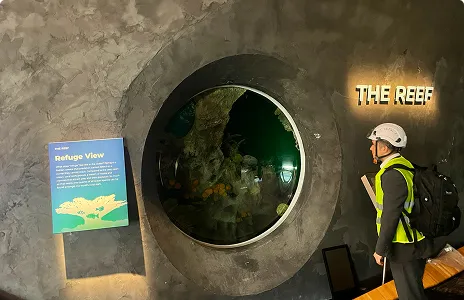
Interactive Learning Through Digital Experience
We unified kiosks, ticketing, and mobile into one cloud-native platform for Seattle Aquarium, raising visitor engagement and streamlining operations across every touchpoint.
A Glance at Our Portfolio
iOS games and live titles we have designed, built, shipped to the App Store, and kept running.

Mindset is the Ultimate Source for Motivation, Self-development and Wisdom. With Mindset, you can play the world’s best motivational, inspirational and educational audios for free.


As part of the vision 2030, the Kingdom of Saudi Arabia has established a partnership with Zazz to modernize their nation wide mobile apps.
Canada Ontario
Built for the government of Ontario, to champion and stimulate the development of world-class technological and employability skills in Ontario youth.
Get cooking with The Roundup™, the definitive guide to buying, cooking & enjoying North American beef! This app has information on beef cuts, recipes, cooking & cuts videos to help you buy the proper cut and cook it confidently.
The app serves as a one-stop solution for Ontario’s electrical contractor community to organize and manage events, and conferences, talk to other members and share updates.
The Ideal Protein App is the digital pocket companion to the Ideal Protein Protocol. This personalized Protocol assistant is designed to help people achieve their weight loss goals and support a new, healthy lifestyle through three prioprietary phases: Weight Loss, Stabilization, and Maintenance.
Designed & Developed to save lives, and help prevent the spread of COVID 19, by providing the most reliable and up to date information needed by Employers across Canada.
iOS Game Genres We Build
We build across genres, and each brings its own technical demands, its own retention curve, and its own route through App Store review. These are the categories our iOS game development team ships most often.

Casual & Hyper-Casual
Casual & Hyper-Casual
- One-thumb controls and sessions built for 30-second play.
- Interstitial and rewarded-ad economies balanced against retention.
- Rapid core-loop iteration and A/B testing on real devices.

Puzzle, Word & Trivia
Puzzle, Word & Trivia
- Difficulty curves and level pacing tuned across many stages.
- Content tooling so fresh puzzle packs ship every week.
- Hint, booster, and streak economies that reward without nagging.

Action, Arcade & Shooter
Action, Arcade & Shooter
- Low input latency tuned for fast-twitch capacitive touch.
- Steady frame pacing held under heavy on-screen load.
- MFi and external game controller support where it helps.

Sports & Racing
Sports & Racing
- Physics, collision, and vehicle handling tuned for handheld play.
- Asset pipelines for vehicles, tracks, teams, and players.
- Season ladders, live standings, and career-mode progression.

Simulation & Tycoon
Simulation & Tycoon
- City, farm, and business builders with deep economy loops.
- Save systems and offline progression that survive long sessions.
- Seasonal content and events that keep a management loop fresh.

RPG & Adventure
RPG & Adventure
- Quest logs, inventory, dialogue trees, and cloud saves.
- Streamed open worlds kept within a lean build size.
- Narrative branching and localization pipelines for many locales.

Strategy & Simulation
Strategy & Simulation
- Deep state management and rules-engine balancing at scale.
- Long-session battery, memory, and heat management on device.
- Dense strategy UI kept legible on a phone screen.

Multiplayer & Social
Multiplayer & Social
- Authoritative servers keeping real-time and turn-based play in sync.
- Game Center matchmaking, leaderboards, and party invites.
- Server-side anti-cheat, validation, and abuse rate limiting.

AR & Location-Based
AR & Location-Based
- ARKit plane detection, occlusion, and persistent world anchors.
- Geofenced and GPS-driven gameplay across real locations.
- Multiplayer AR sessions shared live between nearby players.

Kids & Learning Games
Kids & Learning Games
- COPPA and kids-category compliance built in from day one.
- Zero third-party tracking and no behavioural advertising.
- Parent gates guarding every purchase and external link.

Fitness & Gamified Health
Fitness & Gamified Health
- HealthKit sync and an Apple Watch companion app.
- Streaks, challenges, and reward loops that sustain a habit.
- Motion, sensor, and step-driven gameplay mechanics.

Enterprise & Training Simulation
Enterprise & Training Simulation
- Serious games for onboarding and repeatable workforce training.
- Scenario authoring with manager dashboards and results reporting.
- MDM distribution and private internal app deployment.
Inside Our Game Studio
AppStudio runs iOS game development as a studio rather than a side line, for publishers, indie teams, and brands based anywhere from Toronto to New York and California. Projects range from a first prototype to a shipped title with millions of installs, split between original games and rescue work that lands half-built from a previous vendor. A game app development company that treats Apple as a second export target usually leaves the platform-specific work unfinished, and that gap is what we are most often brought in to close.
A specialist and a generalist app shop part ways in the work no demo shows: holding a steady frame rate on a handset three years old, keeping memory flat through a long session, and turning a rejection around without fuss. Our iOS engineers and artists stay on Apple platforms week after week, which is why those details survive contact with real players. Comparing studios comes down to three checks every time, so play a title each has shipped on older hardware, confirm who owns the code, and ask the first-pass App Store approval rate. That kind of sustained focus is what game development iOS actually demands.
Scope Your iOS Game Development Services →

Frequently Asked Questions
Ready to Build Your iOS Game?
You get an iOS game development company that knows Apple platforms in depth, scopes in phases you can actually fund, and stays on the game through launch and the seasons that follow it.
Start Your iOS Game Development Project →
Request an iOS Game Project Consultation
Give us the game concept, the devices you want to hit, and any date you are working toward, and an iOS game development lead comes back with scope, an engine call, and a cost range, usually inside one business day.

